
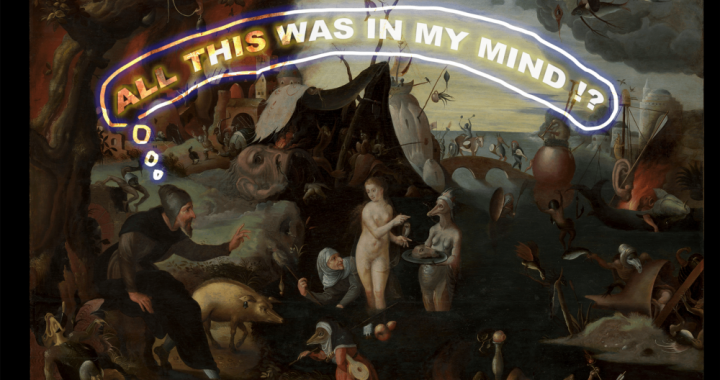
With the incredible rise in popularity of mindfulness practice, some are beginning to question if mindfulness is as good for you as some would have you believe. There are now various reports of adverse reactions — just exactly what is happening?
I had always thought that mindfulness was a pretty uncontroversial topic. Although there was some suspicion at the industry that seemed to be building up around this technique. However, when I stumbled across an article in the UK newspaper, The Guardian, entitled, ‘Is Mindfulness Making Us Ill?’, I realised that the backlash was underway. In a sense, this is no surprise. In an era of fast news and ephemeral views, fashions explode into popularity, some people make a lot of money until some other people can tear down the idea sufficiently for people to move on. It is a well-established pattern that repeats in many areas of life, but particularly around physical and mental health. Does anyone know if coffee is good or bad for you?
Many have benefitted from mindfulness
In the interests of transparency, I have to declare my life-long interest in Daoism and Buddhism, as well as martial arts. I consider myself perhaps better versed in eastern philosophy than most, albeit I am no master. I know this especially as I have met masters, Tibetan Lamas who have dedicated their lives to their practice. You can not help but admire their unflappable good spirit, effortless wisdom and the profound sense of peace. They obviously don’t seem to suffer from mindfulness practice. And I myself have practised mindfulness and have found it invaluable in overcoming some of the hardest experiences of my life. In addition, a quick search will reveal thousands of others relating their positive experiences in blogs and articles.
Yet there is a real issue to address here. In the Guardian article, the author, Dawn Foster, recounts her own attempt at mindfulness practice that led to a panic attack. She further describes another woman, Claire, for whom Mindfulness triggered a relapse into a previous condition that led to three months in a psychiatric unit. Hardly trivial.
There is no uniform response to mindfulness practice

The Scream – Edvard Munch
A 2016 BBC radio documentary by Jolyon Jenkins, described a study that looked at a group of men pursuing mindfulness for ‘non-clinical reasons’, i.e. they were not particularly ill or stressed. Of that group, a quarter found the experience difficult or adverse. These reactions ranged from simply being bored, to existential crises, where the sense of self, was challenged, to ‘trippy experiences that many found pleasurable, but some found frightening’. We can conclude that mindfulness at least has an effect.
A search on google will turn up many more articles that will warn of the dangers of mindfulness and meditation, so what is actually going on here? I think there can be no doubt that some people do react adversely to mindfulness techniques. Others gain nothing but benefit, with a range of reactions in between. What did strike me about many of the articles that warned of the dangers, was that they referred to ‘general claims about mindfulness’, and couldn’t really point to a source for the problem. This was an alarm bell.
Mindfulness was one tool amongst many in buddhism, now turned into its own practice in the west

The Gaki Zoshi or ‘hungry ghosts’ depicted in a 12th century japanese buddhist scroll.
What has happened has been an explosion of popularity for mindfulness. It has now cropped up across the western world in schools, corporations, businesses, management training, health care providers and community groups. This has, in turn, created an opportunity for would-be teachers, or digital aids such as the hugely successful, Headspace app. Also what has happened, is what always seems to happen with western culture. We have plucked one element of a system, one technique and started marketing it as a panacea. Our culture is constantly looking for the magic bullet, the pill to end all ills, and mindfulness is one such.
What we really require is a reality check. Mindfulness was developed as a tool for use within a Buddhist tradition that offered much more besides meditation and mindfulness. It was merely a part of the dharma (teachings of the Buddha). By abstracting this tool from its philosophical roots, we have taken away the mechanism by which those who might suffer adverse effects might remedy those effects.
Can you use the tool without the manual?
Think of it like fixing a car. If you take one tool from a toolbox and ignore the manual, you will be fine if your knowledge is good and all you need is that one tool. However, if your understanding is poor, you are more likely to make the car worse. All metaphors are limited, but this illustrates a little of the problem. Renowned Buddhist monk, Matthieu Ricard, argued that of itself, mindfulness might be just as useful for being a better sniper, rather than elevating your whole being [2]. In other words, you can approach it only as a mind-training exercise, or in its original context, you can treat it as a tool for achieving enlightenment.
It is true that when faced with the concept of enlightenment, many westerners have no concept of what this refers to. However, if we just think of it as a means by which humans progress, become better people, more fulfilled and more valuable to the rest of existence as a whole, then perhaps it can begin to make sense.
Does this mean we all have to become Buddhist to become mindfulness practitioners? In answer to that, I will repeat what Tibetan, Lama Yeshe Losal Rinpoche, told a gathering of westerners who were there to ‘take refuge’ and become Buddhist. He said,
“It is not important to call yourself Buddhist, just be a good person”.
From this simple statement, we should take the important message that mindfulness is a great tool in pursuit of becoming a better person.
We should also recognise that if practising mindfulness in a traditional Buddhist setting, you will be with people who have learnt their skills over many years and those skills will have been passed down a lineage over thousands of years. If you are practising mindfulness in a corporate setting, organised by ‘Human Resources’, you may well be being taught by Bill who took a two-day course last month. The basic practice may appear to be the same, the accompanying wisdom of its results will be worlds apart.
Should we be pursuing happiness?
There is a fundamental difference between the western concept of health and the Buddhist. In the west we are often concerned with how we may be ‘feeling’ at any point in time and we have to try and change that state to happy or else we’re failing. Yet the pursuit of happiness is a meaningless and futile pursuit, it is fleeting and transitory. We’ve probably all tried it as young adults, pursuing sex, altered states of mind through alcohold or drugs and music so loud the rest of the world can’t be heard. It works for a few hours and then we wake up more miserable than before. Or we’re sad because we’ve lost that euphoric state. Many people having recognised this, do not so much pursue happiness as minimise discomfort. In other words, they find themselves a reasonably comfortable rut in which to stay and cling desparately to that apparent equilibrium. God forbid fate steps in to upset it.
Maintain the equilibrium at all costs

Unstable equilibrium
If we then consider our group of men who tried mindfulness, 25% experiencing adverse reactions. We can hypothesise that they were existing in equilibrium, minimising their discomforts, avoiding pursuits that might rock that boat. In traditional therapeutic terms, they may well have been repressing issues, or consigning them to the hidden depths of the unconscious. With their problems safely stored away, they can then experience relative equilibrium. Their maintenance strategies, like most people in the west, and now east, is to fill heads with noise to drown out any cries these internal issues might utter. We watch TV, take part in social media, listen to the radio, go to the cinema, go the gym with big beats pumping out over the stereo, go for a run with tunes in our ears. Heaven forbid we actually take notice of what’s actually going on in our minds. And then suddenly you introduce mindfulness.
A 180 degree turn is not for the fainthearted
This group of men are lead through a practice that is the reverse of our cultural habits, suddenly pulling a mental handbrake turn. It makes them take notice of what is happening in their minds, is it any wonder that a quarter of them suffer adverse effects? The only surprise is that it wasn’t more, but I suspect that that is because some of those men are more practised at not noticing, may have less obvious issues, or are just as capable of generating white noise internally.
The fact is that mindfulness opens up your awareness. If you know you might have unconscious fragility, you would be well advised to only practice this when ready. And then with the necessary support – should you access long-hidden trauma. You would also be well advised only to practice mindfulness if you have committed yourself to a quest for self-improvement, of self-knowledge, of wisdom seeking and of service. But this comes with a warning: it is not easy.
Life is a quest and quests come with monsters
Why would such a journey be easy? Why would we even begin to imagine that such a journey should be without pain? To deal with our unconscious demons means facing demons consciously, it is not a trip to the fairground. It is not undertaken lightly, but it is also ignored at your peril. We can ignore quests, pursue happiness or equilibrium, but most likely we will find neither happiness, fulfilment nor purpose in such a life. As the great mythologist, Joseph Campbell pointed out;
‘The cave you fear to enter holds the treasure you seek’
 Why did a mythologist know this? Because he studied the folklore and mythology of the world and found that they all dealt with the similar themes of what it is to be alive and to be human. In fact, the stories contained in these mythologies were so close that Campbell developed the idea of the ‘monomyth’ — all the world’s mythology is describing the same thing. To be human and to embrace life, is to quest and seek after treasure. But the treasure is guarded, by dragons and demons. You have no right to that treasure until you face those monsters. And of course, the treasure is a metaphor for fulfilment and wisdom. These are the qualities that represent the most profound way in which to feel that our lives are well lived and have meaning.
Employ mindfulness in the understanding of what you are undertaking
Where does that leave us with mindfulness? It means that mindfulness is a powerful tool by which we can not only take charge of our minds and its thought processes, but it is also the gateway to facing the monsters and demons of our unconscious.
People starting to practice mindfulness should be sufficiently aware of what is at stake before embarking on this journey. It is not just a tool to produce greater productivity and increase profit margins — this is a debased and unwise way in which to approach mindfulness. It is not a tool by which to get more of what we want, as observing your own thought processes may well give you much that you don’t want. The point is that by seeing it, you can begin to deal with it. To approach your monsters is to diminish them. It is unrealistic to think we can maintain our precarious equilibriums for a lifetime — something always comes along to upset it for most of us. The question is, do you want to be in control of that process, or a victim of it?
Mindfulness can be a martial art in which you are the only opponent

Chen Weiming practices with sword
Mindfulness can be a great tool for self-development and improvement, but offered by the unwise to the unaware it can be a dangerous tool that can open up issues that the practitioner is not ready to face. It is also a tool of personal responsibility. We do not take up martial arts expecting never to get a bruise. When a person suggests that ‘mindfulness caused me damage’, what they mean is that they were not prepared to look inside, not prepared for their own minds, for what they saw there. No one should practice mindfulness who is not also taking responsibility for their own journey. You don’t drive a car into an oak tree and blame the acorn for falling there three hundred years ago.
If you’re sent to a mindfulness course by HR, don’t do it to avoid work for a couple of days. Don’t do it because it is ‘being done to you’. Don’t do it with Trisha who just watched a youtube video on it, or Bill who did a quick course. If you are intent on your personal development, to become a better person, to tackle your internal issues, to seek your inner treasure, to take responsibility, then you will use mindfulness to your benefit. You will seek out experienced practitioners and wise counsel. It is your life, take control.
References:
Foster, D (Jan 23, 2016) Is mindfulness making us ill? Retrieved from: https://www.theguardian.com/lifeandstyle/2016/jan/23/is-mindfulness-making-us-ill
Ricard, M (April 28, 2009). A Sniper’s “Mindfulness”. Retrieved from: http://www.matthieuricard.org/en/blog/posts/a-sniper-s-mindfulness
Campbell, Joseph (2004). The Hero with a Thousand Faces. Princeton, N.J: Princeton University Press.
Jenkins, Jolyjon (2016). Out of the Ordinary. https://www.bbc.co.uk/programmes/b0738hm2