
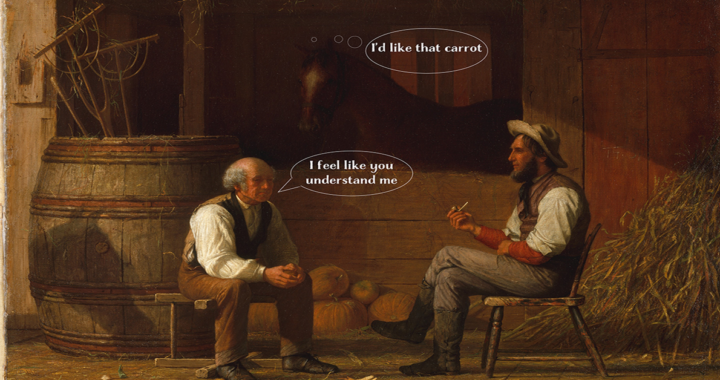
You are what you do, not what you say you’ll do
Carl Jung
If we take Jung’s statement as a starting point, then counselling could be considered the bringing into alignment our thoughts, words and actions. Of course there are many different approaches and settings that assume the process of ‘counselling’ – but all are attempting to aid the client in living a more satisfying and fulfilling life. (See article on Rogers).
“Counselling is a professional relationship that empowers diverse individuals, families, and groups to accomplish mental health, wellness, education, and career goals” [1]
This is the definition arrived at by several of the large counselling bodies of America. Beyond this catchall definition it is useful to look at what counselling is not as well as what it is:
- It is a process that occurs between a client and a counsellor over a period of time and multiple sessions, which may explore difficulties being experienced by the client due to negative emotional states or external stress
- It is not giving advice
- It is the act of helping a client to view their situation in a different light, or from a different perspective. This can help the client to identify feelings, experience or behaviour that may be key to achieving change
- It is not judgmental
- It is a professional relationship. Relationships require trust to thrive, and this is fundamental to the counsellor-client relationship. Confidentiality must be observed (subject to local law) and professional boundaries maintained.
- It is not a relationship that should become emotionally entangled
- It is a lively and skilled exchange involving choice and preparing for action
- It is not an attempt to solve the problems of the client
- It is the provision of an environment for the client that is conducive to self-reflection
- It is not a place for the counsellor to expect a client to behave in the same way as themselves even if they have faced the same problems [2]
As you can see, the process of arriving at a definition of counselling is in part describing a relationship that has boundaries, in part defining the skill set of the counsellor, in part the challenge faced by the client and in part illustrating a process that will be gone through by counsellor and client.
The relationship, as noted above, needs boundaries, trust and professionalism. It requires a particular temperament to be a counsellor, as you are in a position of trust, and therefore power. To abuse that power through emotional entanglement or lack of confidentiality, would represent the worst transgression of the counsellor relationship. The counsellor must maintain their humility, so as not to judge their clients, while also maintaining a degree of objectivity.
Jung observed that the psychologist/client relationship was like a ‘chemical reaction'[3] and therefore affected not only the client but also the practitioner. And perhaps we would be inhuman if that were not the case, but nonetheless, the counsellor must aim to be the catalyst and not the reactant.
The Skillset of the counsellor may vary depending on their specialism. It is theoretically based, so the counsellor will draw upon various theoretical frameworks, including those that are cognitive, affective, behavioural and systemic. These theories may be applied to individuals, groups and families. [4]
The Challenge faced by the client can be many and varied. A client may be facing a crisis of some kind, have developmental or situational challenges that require help to adapt and adjust to overcome or make the most of such a situation. The range of clients can extend from those suffering mental health disorders at one end of the spectrum to those who may be looking to improve their lives from a starting point of relatively good function. It can include social skills, communication, spiritual guidance, decision-making and career guidance. There is also marriage guidance, grief counselling, abuse or dependence recovery, and dealing with terminal illness.
The Process entered into by counsellor and client can also vary depending on the theoretical framework. Feltham and Dryden[5] refer to the seven stages experienced by the client as they move through the counselling process. This is described as a journey towards self-actualisation. It begins with a potential client in a state of fixity, who would be unlikely to seek counselling, moving through stages that first of all abrogate responsibility and slowly move toward taking responsibility for their own lives, developing their capacity for empathy and compassion towards themselves and others. This journey is not necessarily linear, and a client can appear to go backwards at times and can occupy more than one state at a time.
References:
- 20/20: Consensus definition of Counselling. Retrieved from: https://www.counseling.org/knowledge-center/20-20-a-vision-for-the-future-of-counseling/consensus-definition-of-counseling
- No author is given. Retrieved from https://www.skillsyouneed.com/learn/counselling.html
- Jung, Carl (1933). Modern Man in Search of a Soul. 2nd edition Routledge
- Sheppard, Glen Ed.D. CCC. What is Counselling? A Search for a Definition. From Notebook on Ethics, Legal Issues, and Standards for Counsellors
- Feltham C and Dryden W (1993) Dictionary of Counselling, Whurr Publishers