
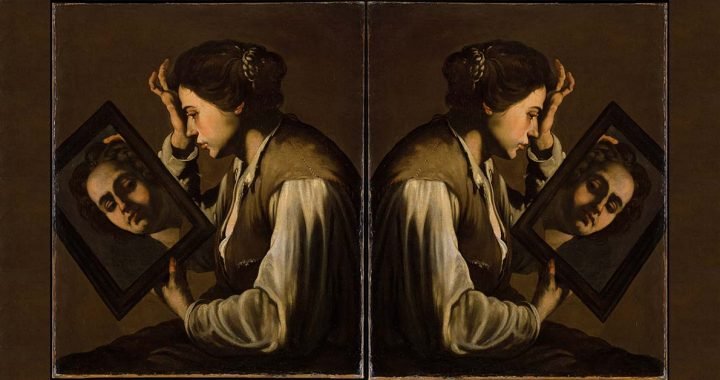
The concept of the conscious, the subconscious and the unconscious
There have been sophisticated theories of mind that have undoubtedly contained the concepts of conscious and subconscious for over two thousand years, most notably in Buddhist philosophy[1]. Greek philosophers also described concepts of mind, including Aristotle and Plato, although they might describe it as the soul. However, Sigmund Freud made the concepts popular in the west at the turn of the 20th century and began the process of creating our modern theories of mind[2]. He first described in detail the three levels of consciousness that we now utilise today.
The conscious mind – a modern development
The first level of consciousness is the conscious state. We have no idea when this facility of the mind truly appeared. Certainly, it must have exploded into the lives of our ancestors at about the time that we developed language, roughly one hundred thousand years ago. Language helps give structure to what we now describe as our conscious experience. This refers to our immediate awareness that you are experiencing as you read this. We make use of our conscious mind when we take in input from our senses, analyse the information, and then make decisions based on this information. Or we can use it turn over information or memories in our minds, carry out calculations or solve puzzles.
What you are aware of at any given point in time is what constitutes your conscious state. It includes the things that we are thinking about right now, whether it is in the front of our minds or the back. If we’re aware of it, then it is in the conscious mind.
For example, at this moment you are consciously aware of the information you are reading. You may also be conscious of the sound of some music you’re listening to. If you’ve just realised you forgot to post a letter or really need the loo – your conscious state. All the thoughts that pass through your mind. The sensations and perceptions from the outside world. The memories that you bring into your awareness are all part of that conscious experience.
Subconscious – it’s on the tip of my tongue
The next of the three levels of consciousness, the subconscious, we can consider as the storehouse of all remembered experiences. Any impressions that are left on the mind by such experiences and tendencies or drivers that are awakened or reinforced by these impressions. Every experience you’ve ever had, every thought, every impression lives in the subconscious mind and influences our patterns of thought and behaviour far more than we realise.
The subconscious holds information that is just below the surface of awareness. An individual can retrieve some of this information with relative ease, or we can have access triggered by certain stimuli, such as an evocative smell, or piece of music that triggers memories of misspent youth.
For example, if someone asked you right now what your father’s name was, you would be able to recall it, or when your souse’s birthday was (I hope!) or when it last rained. You might have to work a bit harder for some memories or have them triggered involuntarily.
The unconscious – hidden trauma, hidden treasure
The final of the three levels of consciousness is the unconscious. The unconscious holds thoughts, memories, primitive or instinctual desires that are buried deep below our conscious awareness. Even though we’re not aware of their existence, they have a significant influence on our behaviour. Freud tended to characterise this level as the storehouse of repressed neuroses or traumas often expressed through dreams. He believed the reason that dreams are obscure is because we have a built-in ‘censor’ that obscures meaning.
Carl Jung, however, rejected this notion of the censor. Jung saw the dream content derived from the unconscious is complimentary or compensatory to conscious content. The language of the unconscious is metaphorical and symbolic, hard for the conscious to grasp.
Our behaviours often point toward the unconscious forces driving them. Yet trying to find the content that is causing it can be very complex. We can’t readily access the unconscious mind, we need oblique methods such as hypnosis or dream analysis. Throughout our childhood, we gathered many different memories and experiences that formed the beliefs, fears and insecurities that we carry today. They are unconscious forces that are driving our current behaviour.
For example, things in your unconscious that might be forgotten include: negative experiences from your past or a traumatic event that you pushed out of your subconscious. There might be experiences or thoughts too threatening to fully acknowledge and are therefore mediated by the subconscious [3].
Your hidden depths

‘Freud’s Iceberg Theory’ uses the imagery of an iceberg to separate these ‘3 levels of consciousness’. In truth, the conscious would be dwarfed to a far greater extent by the contents of the subconscious and unconscious. Our conscious capacity is a little like walking through a dark house with nothing but a narrow flashlight to see our way.
We can also separate the unconscious further. We have the autonomic system, which controls our heartbeat, our breathing, swallowing, digestion and sexual arousal. It controls all our vital biological functions. Our conscious mind would collapse in moments if it had to control them!
The remainder of our unconscious is the hidden storehouse of our being. Yes, it can contain traumatic content, but it also contains inspiration and creativity of incredible potential. Many geniuses directly attribute their major breakthroughs to the workings of the unconscious. Einstein’s dreams lead him to his famous theory of relativity, Edison used sleep to make his breakthroughs. Maybe you can recall a dream that invented landscapes, architecture and art that you simply had never witnessed in conscious life.
Our exploration of the unconscious can serve to overcome trauma, develop as human beings and access the potential that we all hold within.
References:
- De A. Wijesekera, O. H. (1962). The Buddhist Concept of Mind. Buddhist Publication Society, Kandy,Sri Lanka. Retrieved from: https://what-buddha-said.net/library/Leaves/bla09.pdf
- Freud, S. (1915). The unconscious. SE, 14: 159-204
- McLeod, S. (2009) Unconscious Mind. Retrieved from: https://www.simplypsychology.org/unconscious-mind.html